
Bathroom Leakage Repair in Mangalore: Causes, Fixes and How to Choose the Right Contractor
Bathroom leakage is one of the most common and most expensive hidden problems in Mangalore homes. With heavy monsoon rain, constant humidity and salty coastal air, even a small crack in a bathroom floor can let water travel into walls and ceilings for months before you notice it.
In this guide, we explain why bathrooms leak, the warning signs to watch for, how professional toilet waterproofing in Mangalore is done, what affects the cost, and how to find the best waterproofing contractors in Mangalore for your home or apartment.
In This Guide
- Why you need bathroom leakage repair in Mangalore
- Warning signs your bathroom needs waterproofing
- Types of bathroom waterproofing
- How professional toilet waterproofing is done
- Different bathrooms, different solutions
- Common mistakes to avoid
- How to choose the best waterproofing contractors in Mangalore
- What affects the cost
- How long bathroom waterproofing lasts
- Simple maintenance tips
- Frequently asked questions
Why You Need Bathroom Leakage Repair in Mangalore
Bathrooms see water every day, and Mangalore's climate makes things harder. These are the most common causes we find during inspections.
1. Failed or missing waterproofing membrane
Many bathrooms, especially in older buildings, were built with no waterproofing layer or only a thin coat that has since worn out. Once this layer fails, water reaches the slab directly.
2. Cracked or hollow tiles and worn grout
Grout lines are the first place water enters. When grout shrinks or cracks, water slips under the tiles and reaches the slab beneath.
3. Leaking pipe joints and concealed plumbing
Loose CP fittings, damaged CPVC or PVC joints and leaking shower mixers cause slow seepage inside walls. This type of leak often stays hidden for a long time.
4. Poor floor slope
If the floor does not slope toward the drain, water stands on the surface and finds its way through tiny gaps.
5. Weak wall and floor junctions
The corner where the floor meets the wall is a classic leak point because the two surfaces expand and contract differently.
6. Blocked or poorly sealed drains
Gaps around the floor trap, waste pipe and sunken slab outlets let water escape into the structure.
7. Humidity and salt air
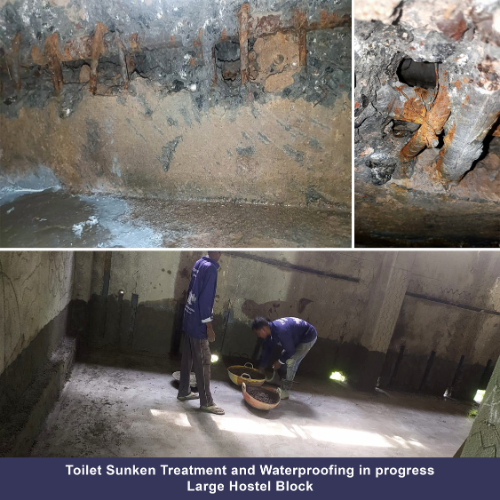
Constant moisture and coastal salts speed up dampness, white salt deposits and rusting of the steel inside concrete.
Warning Signs Your Bathroom Needs Waterproofing
Do not wait for water to drip. Act early if you notice any of these signs:
- Damp patches or peeling paint on the ceiling of the room below
- Dampness on walls that share a boundary with the bathroom
- Tiles that sound hollow, lift or crack
- Black or green mould on walls and grout
- A persistent musty smell
- White salt deposits (efflorescence) on walls
- A rising water bill with no obvious reason
- Rust stains or flaking plaster
Ignoring these signs can lead to damaged plaster, corroded steel and costly structural repairs. In apartments, a leak from your bathroom also affects the neighbour below, which can lead to disputes.
Types of Bathroom Waterproofing Used in Mangalore
The right system depends on the condition of your bathroom, the type of leak and your budget. These are the common options:
- Cementitious waterproofing: A cost-effective option widely used on floors and walls, suitable for new construction and renovation.
- Polymer-modified coatings: More flexible than plain cement coatings, so they handle minor movement better.
- Polyurethane (PU) liquid membranes: Highly flexible and durable, a good fit for bathrooms with movement or complex shapes.
- Crystalline waterproofing: Reacts with moisture to block tiny pores in concrete, useful for sunken slabs.
- Epoxy grout and sealants: Used on tile joints and corners where ordinary grout fails.
- Injection grouting: Seals leaking pipes, cracks and cold joints without breaking the entire floor.
A good contractor will recommend a system after inspecting your bathroom, not before. To see how we approach this, visit our page on bathroom waterproofing services in Mangalore.
How Professional Toilet Waterproofing in Mangalore Is Done
A reliable job follows a clear process. Skipping any step is the leading cause of repeat leaks.
Step 1: Site inspection
The team checks the floor, walls, the ceiling below, plumbing and drain points to find the real source of the leak. Moisture checks help avoid guesswork.
Step 2: Surface preparation
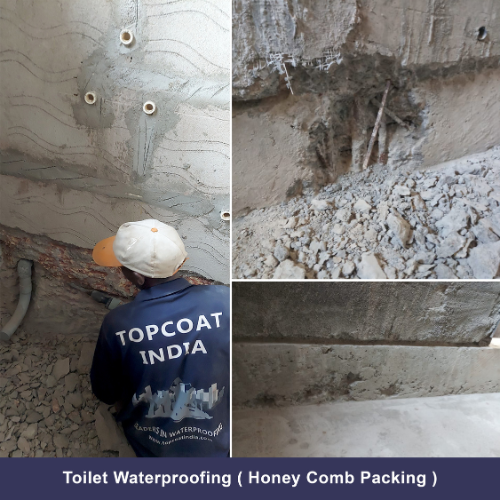
Loose material and old coatings are removed. Cracks are repaired, the surface is cleaned, and pipe openings and drain edges are made ready for treatment.
Step 3: Slope and drain correction
The floor is levelled so that water flows toward the drain. Gaps around pipes and the drain are filled with a suitable sealant or grout.
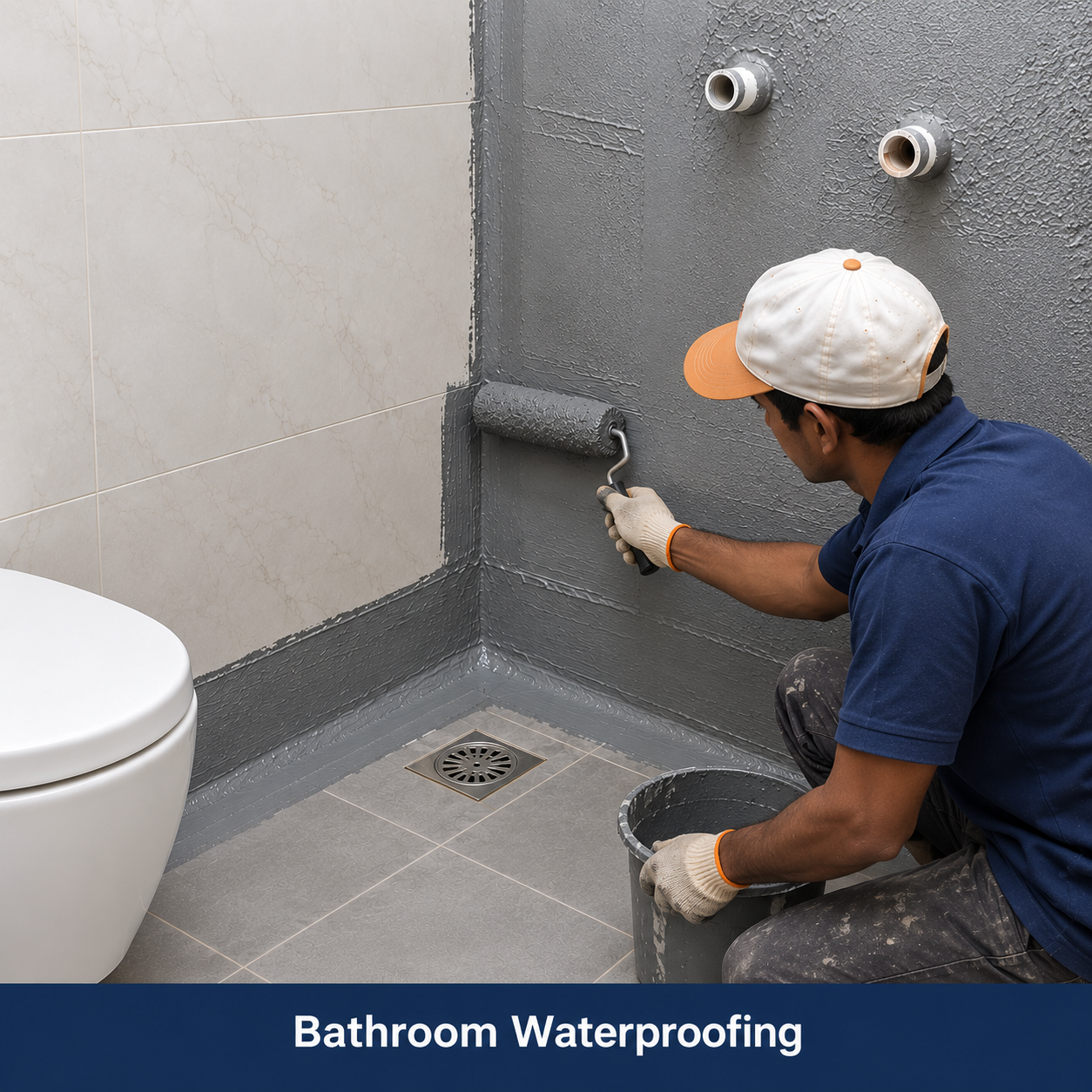
Step 4: Waterproofing application
The chosen coating or membrane is applied in multiple coats as the manufacturer specifies. It is carried up the walls, with extra care at corners and pipe points. Shower areas usually need a higher wall coverage.
Step 5: Ponding test
The bathroom floor is filled with water and left for 24 to 48 hours to confirm there is no leakage. This is the most important quality check in the whole job.
Step 6: Screed and tiling
Once the test passes, a protective screed is laid and tiles are fixed with the right adhesive and grout.
Pro tip: Never tile over a waterproofing layer that has not been tested. Fixing a leak after tiling means breaking everything again.
Different Bathrooms, Different Solutions
- Old bathrooms with existing leaks: These often need tile removal, slab treatment and fresh waterproofing.
- New construction: Waterproofing should be done before tiling, including the sunken slab and wall junctions.
- Sunken slab bathrooms: These need special care in the sunken portion, including the filler layer and pipe sleeves.
- Apartment bathrooms: A leak affects the neighbour below, so a documented test and a quick repair matter.
- Leaks without breaking tiles: In some cases, injection grouting or tile joint treatment can solve the problem with less disruption. A site visit will confirm whether this is possible.
Common Mistakes That Ruin Bathroom Waterproofing
- Only re-grouting: Fresh grout rarely fixes a failed membrane underneath.
- Skipping the ponding test: Without it, you find out about failures only after tiling.
- Poor treatment of pipe points and drains: Most leaks begin here.
- Not carrying the waterproofing up the walls: Water splashes and creeps upward, so floor-only treatment is not enough.
- Ignoring plumbing leaks: Waterproofing cannot fix a leaking pipe. The plumbing must be checked first.
- Choosing the cheapest quote: Very low prices often mean thin coats, cheap material or skipped steps.
- Working in wet conditions: Applying waterproofing on a damp surface weakens the bond.
- No written warranty: Without it, you have no protection if the leak returns.
How to Choose the Best Waterproofing Contractors in Mangalore
When you search for the best waterproofing contractors in Mangalore, several options will appear. Use this checklist to find the right one:
- Experience: Ask for a track record in bathroom and toilet waterproofing, not just general painting or construction.
- Diagnosis first: A good contractor inspects and finds the cause of the leak before quoting.
- Materials: Ask which brand and system will be used. Look for branded, tested products.
- Process: The contractor should explain each step, including the ponding test.
- Written warranty: Get the warranty period and terms in writing.
- Proof of work: Ask for photos of completed bathrooms and references from local customers.
- Clear scope and quote: The quote should list the area, materials, steps and what is included.
What Affects the Cost of Bathroom Leakage Repair in Mangalore?
Every bathroom is different, so a flat price is rarely accurate. These are the main factors that decide the cost:
- Size of the bathroom and wall height to be treated
- Whether tiles need to be removed and relaid
- Condition of the slab and extent of the damage
- Type of waterproofing system and material used
- Plumbing repairs needed along with the waterproofing
- Slope correction and drain work
- Access, floor level and number of bathrooms
- Warranty offered
The cheapest quote is rarely the cheapest result. A repair that fails in a season costs far more than doing it properly once. For an accurate estimate, book an inspection through our bathroom waterproofing services page.
How Long Does Bathroom Waterproofing Last?
With quality materials and correct application, professional bathroom waterproofing can last many years. The actual life depends on the system used, the condition of the structure, the quality of tiling and how well the bathroom is maintained. A written warranty from your contractor will tell you what to expect for your specific job.
Best Time for Bathroom Waterproofing in Mangalore
The best time is before the monsoon, when surfaces are dry and the coating can cure properly. This also lets you test the work before heavy rain begins. That said, an active leak should not wait for a particular season. If water is already seeping into walls or ceilings, get it inspected right away, because damage grows with every wet day.
Simple Maintenance Tips
Good habits help your waterproofing last longer:
- Clean floor drains and traps regularly so water does not stand
- Check grout lines and replace cracked or missing grout early
- Fix dripping taps and leaking shower fittings quickly
- Use a squeegee or mop to remove standing water after use
- Keep the bathroom ventilated to reduce humidity and mould
- Avoid drilling into bathroom walls and floors without checking for pipes and the waterproofing layer
- Watch for damp patches on the ceiling below and act at the first sign
Get Professional Bathroom Waterproofing in Mangalore
If your bathroom is leaking, or you want to protect a new one, a proper inspection is the first step. Topcoat India has been in the waterproofing industry since 2006, with 18+ years of experience and 1000+ projects executed across residential, commercial and industrial sectors. Our office in Mangalore and our team of qualified engineers and supervisors on every project mean your bathroom gets a proven waterproofing system, tested for Indian conditions, and a repair done right the first time.
Explore our bathroom waterproofing services in Mangalore, or read our related guide on terrace leakage repair in Mangalore. Contact us to schedule a site inspection.
Frequently Asked Questions
What causes bathroom leakage in Mangalore?
The most common causes are a failed or missing waterproofing layer, cracked grout and tiles, leaking pipe joints, poor floor slope and weak wall-floor junctions. Mangalore's humidity and heavy rain make these problems show up faster.
How do I know if my toilet needs waterproofing?
Look for damp patches on the ceiling below, dampness on nearby walls, hollow or cracked tiles, mould, a musty smell or salt deposits. Any of these suggest water is getting into the structure.
Can bathroom leakage be repaired without breaking tiles?
Sometimes. Methods like injection grouting or tile joint treatment can fix certain leaks without removing the floor. If the waterproofing layer under the tiles has failed, tile removal is usually needed for a lasting repair. A site inspection will confirm which applies to you.
How long does toilet waterproofing take?
It depends on the size of the bathroom and the method used. The curing and ponding test also add time, so a full job usually takes several days. Your contractor should give you a clear schedule after inspection.
Is a ponding test really necessary?
Yes. Flooding the floor for 24 to 48 hours is the only reliable way to confirm that the waterproofing works before tiles are laid.
Should I fix the plumbing first or waterproof first?
Plumbing leaks should be checked and repaired first. Waterproofing cannot stop water that is escaping from a damaged pipe inside the wall or floor.
Does waterproofing come with a warranty?
A reputable contractor will offer a written warranty. Always ask for the period and terms before you agree to the work.
How do I choose among the best waterproofing contractors in Mangalore?
Check their experience in bathroom work, ask for the materials and process they use, request photos and references of past jobs, and make sure the quote and warranty are in writing.
Do I need waterproofing in a new bathroom?
Yes. Waterproofing should be done during construction, before tiling. It is far cheaper to do it right the first time than to repair a leak later.